Heat Pump Repair in San Antonio
Heat pumps run year-round in San Antonio — cooling 8 months, heating the rest. That's double the wear of a standalone AC or furnace. When something goes wrong, you need a technician who understands both sides of the system.
A heat pump is an air conditioner that can run in reverse — it cools your home in summer by moving heat outside, and heats your home in winter by pulling heat from the outdoor air and moving it inside. It's one system doing two jobs, which makes it efficient. It also means it runs all 12 months of the year in San Antonio, with no off-season to rest.
That year-round operation puts more wear on components than a standalone AC or furnace. Compressors, reversing valves, defrost boards, and fan motors all work harder and fail sooner in a heat pump than in a system that gets 4–8 months off per year. The good news: heat pump repairs follow predictable patterns, and most are the same components that fail in traditional AC systems — capacitors, contactors, refrigerant leaks, and fan motors.
We've been repairing heat pumps across San Antonio for over 24 years. Heat pump adoption has grown significantly in the last decade — the combination of federal tax credits, rising gas costs, and San Antonio's mild winters makes them the logical choice for more and more homeowners. That means we're seeing more heat pump repair calls than ever, and many of them come from homeowners whose previous AC-only company doesn't know how to diagnose heat-pump-specific problems like reversing valve failures or defrost cycle issues.
We service every brand — Trane, Carrier, Lennox, Rheem, Goodman, Daikin, Mitsubishi, and others — in both ducted and ductless configurations. The diagnostic process covers both heating and cooling modes because the problem isn't always in the mode you're using. A refrigerant leak degrades both cooling and heating. A weak capacitor that starts the compressor fine in April will fail under July's peak load. We check the full system, not just the complaint.
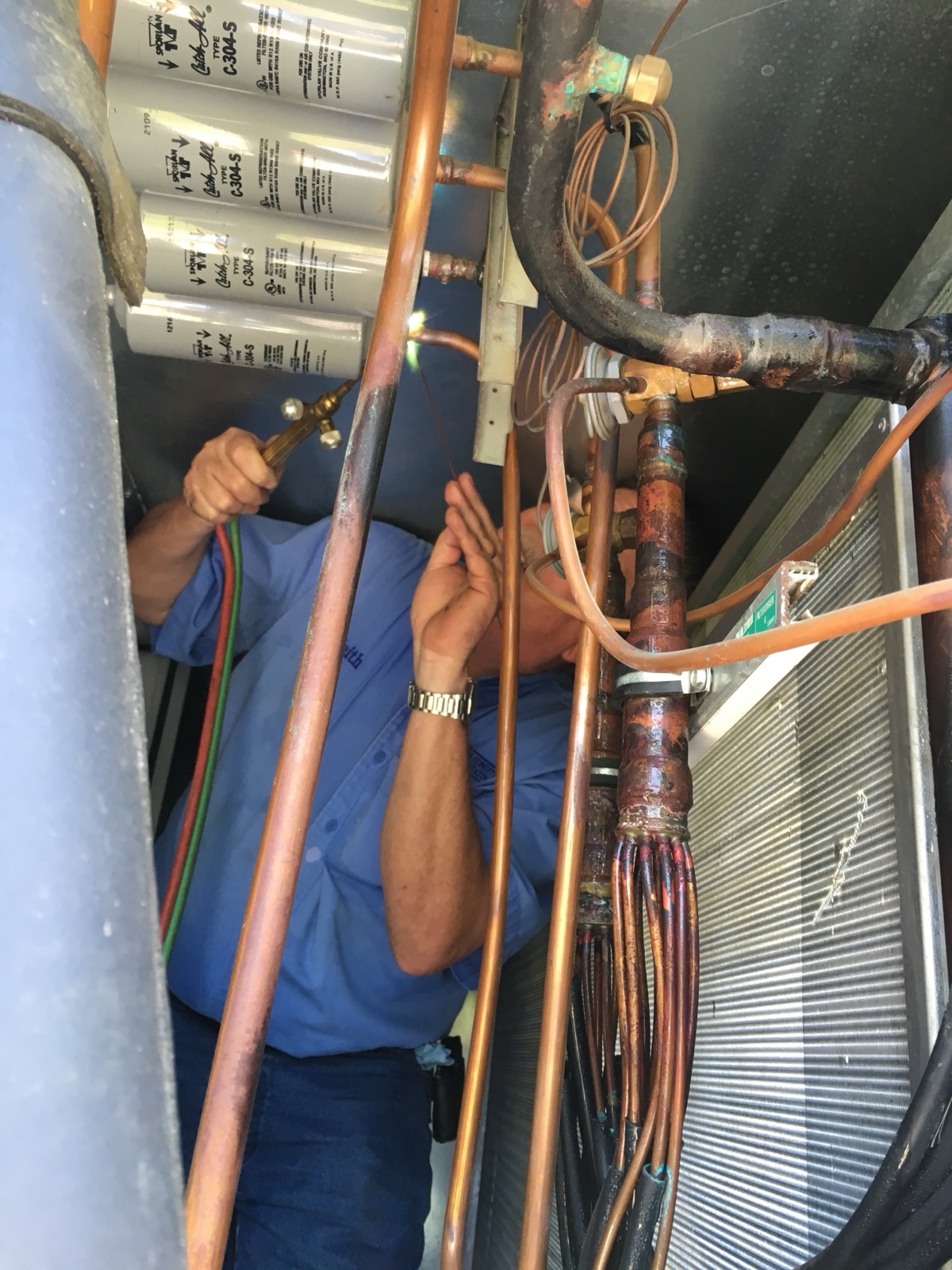
Why Choose Our Heat Pump Repair Service
Common Heat Pump Problems in San Antonio
Heat pumps share many failure modes with traditional AC systems, but they also have unique components — the reversing valve and defrost system — that standalone systems don't have. Here's what we see most often.
Stuck Reversing Valve
The reversing valve switches your heat pump between heating and cooling modes. When it sticks, you get cold air in heat mode or warm air in cool mode. Sometimes it sticks partway, giving you lukewarm air in both modes. Reversing valve replacement runs $500–$900 — it's a heat-pump-specific repair that many AC-only companies misdiagnose.
Defrost Board or Sensor Failure
In heating mode, your outdoor coil collects frost. The defrost cycle melts it periodically to keep airflow clear. When the defrost board or temperature sensor fails, ice builds up on the outdoor unit until airflow is completely blocked. You'll see a solid block of ice around the condenser — that's not normal, and running the system in that condition damages the compressor.
Low Refrigerant / Leak
Same issue as traditional AC, but with year-round consequences. A leak that slowly drains refrigerant degrades both your cooling and heating performance. In heating mode, low refrigerant means the system can't extract enough heat from outdoor air. In cooling mode, you get the familiar warm-air and frozen-coil symptoms. We find and fix the leak — not just top off the refrigerant.
Capacitor and Contactor Failure
The same capacitor and contactor failures that hit traditional AC systems, but heat pumps burn through them faster because the system runs year-round. In San Antonio, where your heat pump cycles thousands of times more per year than a system up north that gets a winter break, these components are the most common repair we perform.
Compressor Issues
Heat pump compressors work harder than AC-only compressors because they run all year and handle the additional stress of reversing refrigerant flow. Compressor failures are the most expensive heat pump repair ($1,200–$2,500). On systems over 10 years old, a compressor failure usually makes replacement the smarter financial decision.
Auxiliary Heat Running Constantly
Most ducted heat pumps have electric backup heat strips for when outdoor temperatures drop too low for the heat pump to keep up. If your CPS Energy bill spikes dramatically in winter, your backup heat might be running when it shouldn't — often caused by a bad outdoor thermostat sensor, low refrigerant, or a defrost issue that's preventing the heat pump from operating efficiently. Electric backup heat costs 3–4x more to run than the heat pump.
What to Expect
You call, we schedule — same-day when possible. Since heat pumps are your only heating and cooling source, we treat these calls with the same urgency as no-heat or no-cool emergencies.
Our technician arrives and asks what you've noticed: which mode failed, when it started, any unusual sounds or behaviors. He checks your thermostat settings to rule out a programming issue before opening any panels.
Full dual-mode diagnostic: he tests the system in both heating and cooling modes (weather permitting). He checks the reversing valve operation, defrost cycle timing, refrigerant pressures in both modes, electrical readings on all components, and airflow. A problem in one mode often reveals a root cause affecting both.
He explains what he found, what caused it, and what it costs. If it's a reversing valve or compressor, he'll also give you a repair-vs-replace comparison for the full system so you can make an informed decision.
We complete the repair, test the system under load in the affected mode, and verify performance matches manufacturer spec. If we replaced a refrigerant component, we leak-test all connections and verify the charge is correct.
Before leaving, we document the diagnosis and repair, and flag anything else that's aging — capacitors, contactors, fan motors — so you know what to watch for. Heat pump components tend to fail in clusters because they're all the same age and have the same year-round usage.
Heat pump repair typically costs $300–$800 in San Antonio.
Reversing valve replacement $500–$900. Diagnostic fee of $89–$250 applies toward repair. 1-year warranty on all repairs.
Frequently Asked Questions
Other Heat Pumps Services
Heat Pump Installation
One system for heating and cooling, lower energy bills, and up to $4,000 back in rebates and tax credits. In San Antonio...
Learn MoreHeat Pump Maintenance
Your heat pump runs 12 months a year with no off-season. It needs twice the maintenance of a standalone AC or furnace —...
Learn MoreNeed Heat Pump Repair?
Contact us today for fast, reliable service from licensed technicians.